Share Delbert Kauffman's obituary with others.
Invite friends and family to read the obituary and add memories.
Stay updated
We'll notify you when service details or new memories are added.
You're now following this obituary
We'll email you when there are updates.
Select your format and elements to print

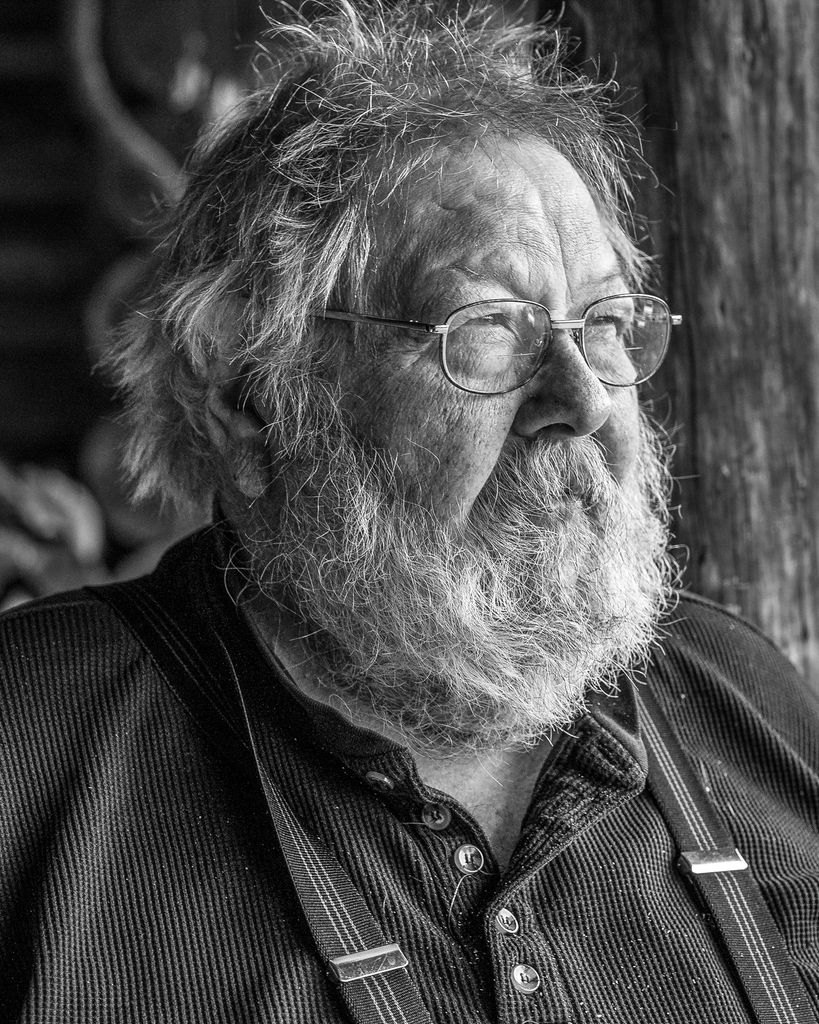


Delbert Kauffman
Aug 26, 1934 — May 21, 2026
Delbert Lee Kauffman of Takilma, Oregon passed away peacefully at his log cabin home on May 21, 2026. He was 91 and left this earth surrounded by his beloved wife of nearly 65 years, Helen, his family, and trusted caregivers.
A farmer, soldier, father, logger, counterculture figure, entrepreneur, craftsman, and peacekeeper, Delbert lived a beautifully full and varied life. Throughout his long journey, he consistently followed his own unique path. A man of decisive action, he forged a life loyal to his own principles and passions. Whether born of his belief in an idealistic vision or the grit of a hard-working Iowa farm family, he was generous to a fault. His generosity took many forms, and his dear wife frequently and graciously bore the burden of feeding the hitchhikers, ex-cons, and other drifters he warmly welcomed home.
Born in rural Rolfe, Iowa, to Danish and German parents, Delbert grew up on a farm raising hogs and growing corn and soybeans. He graduated from Seneca High School at just 16 and joined the Marines at 18, deploying to Korea directly after the cessation of hostilities in 1953. He served on the USS Bexar as part of the peacekeeping mission and later used the GI Bill to earn an Economics degree at Long Beach State College. He met Helen in Southern California, where she was teaching public school.
In 1963, Delbert took ownership of the Golden Bear in Huntington Beach, California, and transformed it into a landmark folk club. With Delbert at the helm, the club booked legendary acts during their developmental years, including David Crosby, Hoyt Axton, The Lovin' Spoonful, and Buffalo Springfield. The experiment lasted three years before going broke. Delbert reshaped the Golden Bear from a quiet diner into an important cultural icon, giving an early glimpse of his ability to meet the moment with foresight and flair.
The cultural awakening of the late 1960s fueled Delbert’s dreams of leaving urban California. Family legend says he moved to Southern Oregon after reading a glowing letter from a friend about Takilma. At the time, the valley buzzed with communal experiments. Delbert and Helen tested these communes but ultimately opted to homestead independently. For Delbert, the communal ideal of "governance by committee" conflicted with his desire to get things done. For Helen, the early hippies' inability to put the needs of the children first clashed with her own maternal instincts. The young family wanted a radical break from tradition but wanted it on their own terms, choosing personal self-reliance over communal living.
During the 1970s, as waves of young people flooded the Illinois Valley, tensions flared between the conservative, timber-working locals and the incoming youth. With his practical nature and grounded personality, Delbert became a vital bridge between the two sides of the community. His dedication to community, warm hospitality, and knack for treating everyone equally earned him the affectionate nickname "Mayor of Takilma".
Motivated by helping his neighbors, Delbert began cutting firewood and giving it away to needy families. What started simply, eventually grew into Kauffman Wood Products (KWP), a business
that included horse logging, post and pole retail sales, wood fencing, pole barn and log cabin construction, and handcrafted log furniture. Despite lacking a formal background in construction, Delbert took traditional timber-frame construction and brought clever, hands on solutions to the craft. KWP built over 300 log structures across Southern Oregon and Northern California.
In the final chapter of Kauffman Wood Products, Delbert created a handcrafted furniture line that blended traditional woodworking techniques with an elegant rustic style. Delbert’s design sense, natural charm, and countercultural persona all added to the appeal. He knew his furniture could not compete against factory-made furniture but he didn’t want to. He understood that his customers sought products that reflected a different way of doing business and came from a man known as a pillar of the counterculture community.
In 2008, Delbert suffered a heart attack and required quadruple-bypass surgery. Diagnosed with heart disease and Type 2 diabetes, Helen helped him change his diet and he began walking daily. As he aged, these walks up Hope Mountain—a fitting namesake that always made him smile—became an important part of his routine and kept him connected to the community. If you ever joined Delbert on his morning walk, you’ll recall him at his most cheerful, talkative, and philosophical. Making the daily trek with his dear friend, Jim Rich (the local blacksmith who passed in 2013), elevated the experience for them both.
By 2010, the ongoing economic recession forced Delbert to close his operations in Kerby. He moved the business back to his home shop in Takilma, bringing his long journey full circle, right back to where it all began.
Delbert’s life was profoundly shaped by the countercultural revolution and grounded in the realities of a rural community during chaotic times. He possessed a rare ability to build a world that completely reflected his values, which he readily shared with all who wandered into his orbit.
Delbert is survived by his beloved wife, Helen; his children, Zac, Marcus, Matthew, Matina, and Angelique; their spouses; and eight grandchildren. His eldest son, Russel, passed away in 2016.
Please share a memory of Delbert in his guestbook.
Guestbook
This site is protected by reCAPTCHA and the
Google Privacy Policy and Terms of Service apply.
Service map data © OpenStreetMap contributors